

Title IX
Title IX at Dalton State College
Dalton State College is committed to creating a campus environment where students, employees, and visitors are treated with dignity, respect, and fairness. Title IX is a federal law that protects individuals from sex discrimination in education programs, activities, and employment. This includes protection from sexual harassment, sexual assault, dating violence, domestic violence, stalking, and other forms of sexual misconduct.
Through education, prevention, supportive resources, and fair response procedures, Dalton State works to reduce sexual misconduct and support those who may be impacted. Anyone who experiences, witnesses, or becomes aware of possible sex discrimination or sexual misconduct is encouraged to report the concern so the College can provide support, explain options, and respond appropriately.
Dalton State strongly encourages members of the College community to report instances of sexual misconduct promptly. These policies and procedures are intended to ensure that all parties involved receive appropriate support and fair treatment and that allegations of sexual misconduct are handled in a prompt, thorough, and equitable manner.
“No person in the United States shall, on the basis of sex, be excluded from participation in, denied the benefits of, or be subjected to discrimination under any education program or activity receiving Federal financial assistance.” – Title IX of the Education Amendments of 1972, and its implementing regulation at 34 C.F.R. Part 106 (Title IX)
Title IX of the Education Amendments of 1972 is a federal law that prohibits sex discrimination in an educational program or activity. Discrimination based on sex includes, but is not limited to, sexual misconduct, harassment, retaliation, dating or domestic violence, stalking, admissions, recruitment, financial aid, grading, housing, athletics, and employment.
How to Report
A Title IX Coordinator will review the report and reach out within approximately 1–2 business days. To find out what happens after submtting a report, please see below under Helpful Information.
Helpful Information
Anyone may report possible sexual misconduct to Dalton State College. Reports may be made by the person who experienced the conduct or by someone who witnessed or learned about the concern. Reports can be submitted to the Title IX Coordinator by email, phone, letter, written statement, in-person meeting, or another method that provides information about the situation.
Reports may also be made to a Responsible Employee, who is required to share all known information with the Title IX Coordinator. Responsible Employees should not investigate or resolve the concern on their own.
After a report is received, the Title IX Coordinator will contact the Complainant to discuss supportive measures, explain available options, and review the process for filing a formal complaint. A report does not automatically result in an investigation.
- A Title IX Coordinator will review the report and reach out within approximately 1–2 business days.
- Supportive measures may be offered regardless of whether a formal complaint is filed.
- The reporting individual will be informed of available options and resources. If a formal complaint is filed, an investigation process may begin.
- Retaliation for reporting or participating in a Title IX process is prohibited.
You may receive support, resources, and assistance from the College without filing a formal complaint. Supportive measures are designed to help maintain access to educational and work environments. Examples include but are not limited to – i. Academic adjustments ii. No-contact directives iii. Counseling and advocacy support
The Title IX Coordinator is responsible for monitoring and overseeing Title IX compliance at the college, including coordinating training, education, communications, and the administration of grievance procedures for faculty, staff, students, and other members of the Dalton State community.
William Mast, Title IX Coordinator
Dalton State follows the Board of Regents Sexual Misconduct Policy 6.7, Dalton State’s Sexual Misconduct Policy, and the Board of Regents Policy Standards for Institutional Student Conduct Investigation and Disciplinary Proceedings 4.7 for all allegations involving student sexual misconduct.
A Responsible Employee is a Dalton State College employee who is required to promptly report information about possible sexual misconduct to the Title IX Coordinator. This allows the College to offer support, explain options, and respond appropriately.
Responsible Employees generally include employees who have authority or leadership responsibilities on campus, such as administrators, supervisors, faculty members, and other employees in positions of authority. Some student employees may also be considered Responsible Employees when they serve in supervisory, advisory, or leadership roles, such as resident assistants, student managers, teaching assistants, or orientation leaders.
Responsible Employees are not confidential resources. This means that if they learn about possible sexual misconduct, they must share the information they know with the Title IX Coordinator. They should not investigate, resolve, or handle the concern on their own.
Employees who are designated as Privileged Employees are not considered Responsible Employees when acting in those roles.
A Privileged Employee is an employee or designated professional who may speak with a Complainant or alleged victim in confidence, as allowed by law. Disclosing information to a Privileged Employee does not automatically begin a Title IX investigation or require the College to act against the person’s wishes.
Privileged Employees may include professionals who provide counseling, advocacy, health, mental health, pastoral care, or sexual-assault-related services, such as licensed counselors, health providers, pastoral counselors, victim advocates, or sexual assault resource center staff. Confidentiality may be limited when required by law, including situations involving suspected abuse of a minor or an imminent threat of serious harm.
Title IX prohibits discrimination on the basis of sex in educational programs and activities. This protection extends to pregnancy and the conditions arising in connection with a pregnancy such as:
- Pregnancy,
- Childbirth,
- Termination of pregnancy,
- False pregnancy,
- Miscarriage,
- Medical conditions during pregnancy, or
- Medically required recovery arising in connection with pregnancy or any of these conditions.
It is illegal to exclude a pregnant student from classes or any other activity that non-pregnant students may access.
Absences
Absences due to pregnancy and pregnancy-related conditions must be excused. Equal Opportunity and Title IX Compliance may request documentation from a doctor to ensure that the absence is medically necessary. If classes are missed due to a pregnancy-related condition, faculty must provide an opportunity to make up any work the student would have had to complete if they were in class.
Reasonable Modifications and Adjustments
Students who are pregnant or have pregnancy-related conditions are entitled to reasonable modification that are provided to other students who have temporary medical conditions to ensure equal access to the college’s education program and activities. Reasonable modifications are those that do not fundamentally alter the College’s education program or activity.
Any student seeking reasonable modifications must contact Disability or Title IX. Please note that some reasonable modifications may require documentation from your health care provider detailing needs that are medically necessary. Students will then be contacted to discuss appropriate and available reasonable modifications based on their individual needs and the medical documentation provided by the student.
Students are encouraged to request reasonable modifications as promptly as possible, as retroactive modifications are not available.
Reasonable modifications are voluntary, and a student can accept or decline the offered reasonable modifications. Not all reasonable modifications are appropriate for all contexts. Reasonable modification end when pregnancy-related conditions manifest as temporary disabilities.
Reasonable modifications that are available include, but are not limited to the following:
- Breaks during class and tests as needed
- Rescheduling tests or exams
- Excusing medically-necessary absences as needed due to pregnancy and pregnancy-related conditions
- Extending deadlines and/or allowing students to make up tests or assignments for pregnancy-related absences
- Submitting work after a deadline
- Requesting a larger desk
- Mobility support
- Modifications to the physical environment
- Providing alternatives to make up missed work
- Requesting an incomplete, course withdrawal or replacement
- Student employment leave
- Receiving parking adjustments
- Academic leave of absence
- Allowing breastfeeding students reasonable time and space to pump breast milk in a location that is private, clean and reasonably accessible
- Allowing excused absences for parenting students who need to perform duties such as taking care of a sick child or bringing a child to a medical appointment
Please note that the college is not required to make any reasonable modifications that fundamentally alter any essential elements of any academic program.
Our Title IX Coordinators
Dalton State Title IX Coordinators are responsible for ensuring our compliance with Title IX.
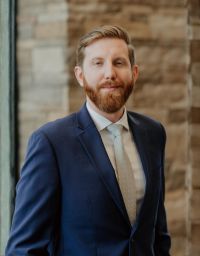
William Mast
Director for Community Standards & Student OutreachResponsibilities of a Title IX Coordinator
- Compliance
- Prevention and Awareness
- Training
- Investigations
- Serve as an impartial representative of the institution
- Answer questions and provide guidance about Title IX
- Act as liaison to the state and federal agencies that enforce Title IX
- Data Collection and Reporting
Inquiries about Title IX
Inquiries concerning the application of Title IX may be referred to the Title IX Coordinator listed above or can be referred to the U.S. Department of Education
U.S. Department of Education
Office for Civil Rights
Lyndon Baines Johnson Department of Education
Bldg.400 Maryland Avenue, SWWashington, DC 20202-1100
[email protected]
If you wish to fill out a complaint form online with the agency, you may do so at: https://www2.ed.gov/about/offices/list/ocr/complaintintro.html
Title IX Information
The University System of Georgia (USG) is committed to ensuring the highest ethical conduct of the members of its community by promoting a safe learning
Learn More How to ReportReport a complaint
Learn More AppealsThe Title IX Appeals is where the sanction imposed includes a suspension or expulsion (even for one held in abeyance), and the following appellate proced
Learn More TrainingWe have provided copies of all training materials in accordance with §106.45(b)(10)D.
Learn More ResourcesDiscover helpful resources, such as local police agencies, emergency healthcare, rape treatment centers, and crisis phone lines.
Learn More Policies and ProceduresCampus Policies guide the fostering of a positive community where every student can thrive.
Learn More AccessibilityDalton State ensures accessibility for individuals with disabilities, providing physical and informational access.
Learn More